
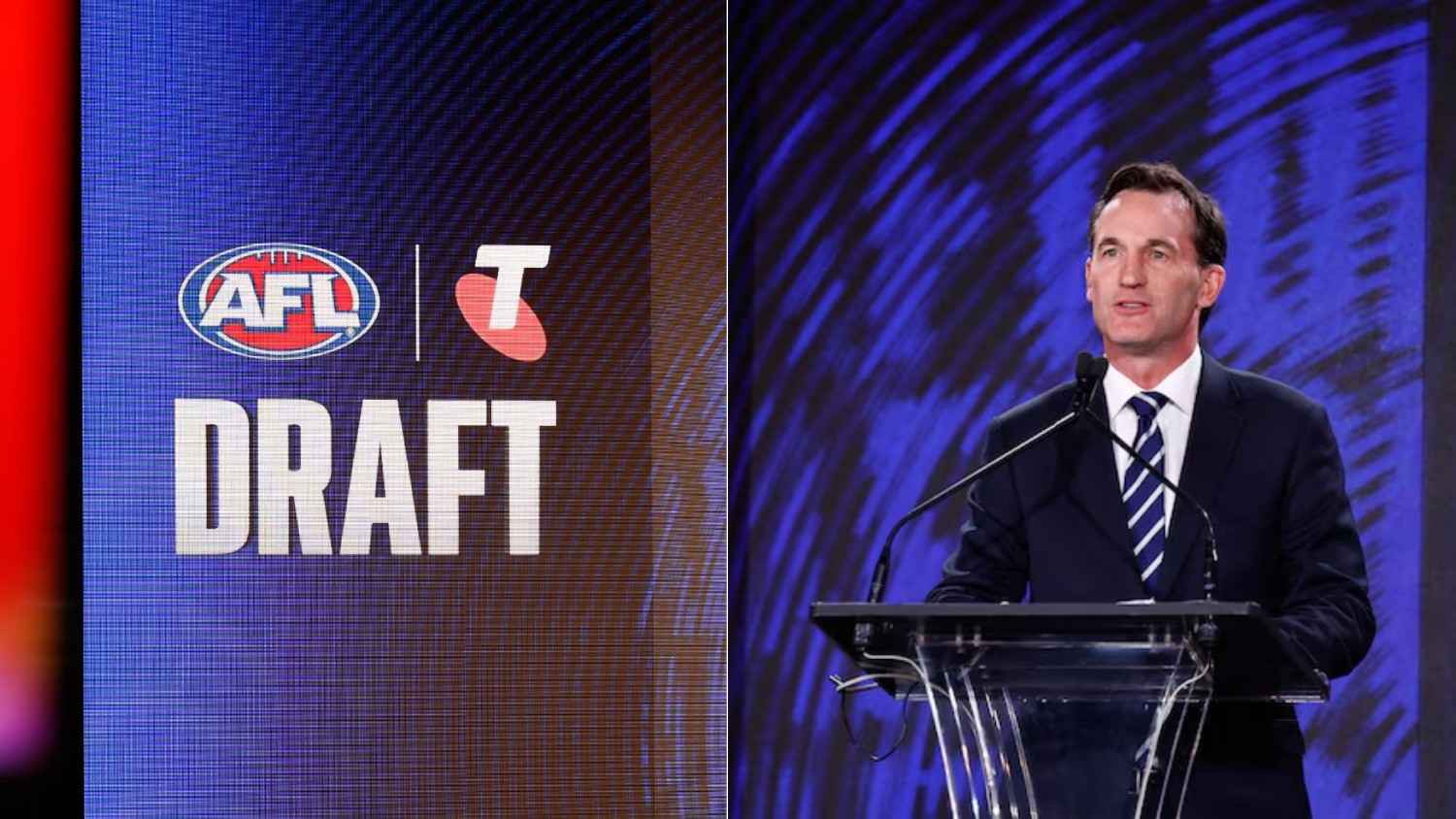
The AFL Draft is the backbone of list management in Australian rules football. Since its inception in 1986, it has shaped how clubs recruit, rebuild, and compete.
Designed by the AFL Commission to promote an even competition, the draft gives every club a genuine pathway back to contention.
Whether you are a lifelong fan or new to the game, understanding how the draft works helps you follow the action far more meaningfully each season.
What Is the AFL Draft?
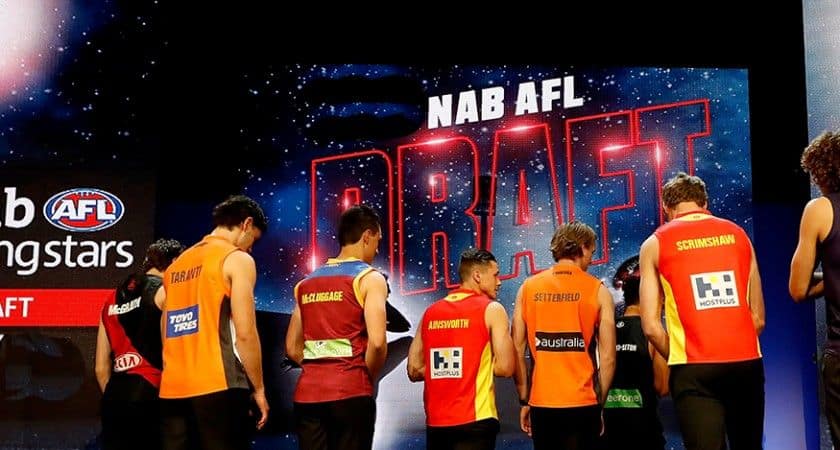
The AFL Draft is the primary mechanism through which clubs add new talent to their lists each season.
It sits alongside the trade period and free agency as one of the three pillars of AFL list management, with one core goal: maintaining a competitive, even competition across all 18 clubs.
How the Draft Order Is Determined
The order is built on a simple foundation, but it gets reshaped by several moving parts before a single name is called on draft night.
The draft follows a reverse ladder system, meaning the worst-performing team picks first:
- The last-placed team receives Pick 1
- The second-last team receives Pick 2, and so on
- Every group of 18 picks is called a “round.”
- The process repeats until clubs no longer wish to select players
However, the final order is rarely a straight reflection of the ladder. It shifts based on:
- Free agency compensation picks: Clubs that lose free agents are awarded picks by the AFL
- Academy and father-son bids: matching bids on tied players reshapes the order significantly
- Live trading on draft night: clubs can swap picks in real time as the night unfolds
Understanding the Draft Value Index (DVI)
The DVI is the points system that underpins every bid and trade decision made on draft night.
Every pick in the draft carries a points value under the Draft Value Index:
- Pick 1 = 3,000 points
- Pick 54 = 14 points
- Picks beyond 54 = zero value
When a club matches a bid on a father-son or Academy player, they must surrender picks totalling the equivalent points value, minus a 10 per cent discount. So matching a Pick 1 bid requires 2,700 points in return picks.
The Three Types of AFL Drafts
The AFL runs three separate drafts across three consecutive days, each serving a distinct purpose for clubs managing their lists and salary cap.
1. The National Draft
The main event, held over two nights, where the bulk of new players are selected. Most draftees are school leavers aged 18, though any player 18 or older can nominate.
2. The Rookie Draft
Held the afternoon after the national draft concludes, the rookie draft gives clubs a chance to add depth players and reclaim recently delisted talent:
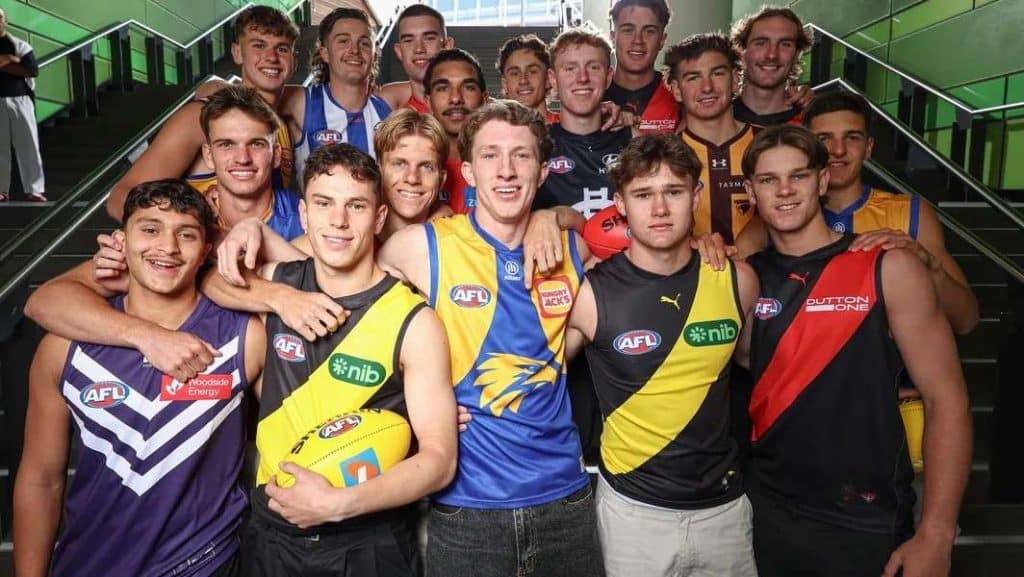
- Players are listed on a club’s rookie list, not the senior list
- The base rookie salary of $100,000 sits outside the salary cap
- Clubs frequently use it to re-draft recently delisted players
- Rookie-listed players can play at AFL level without being upgraded
3. The Pre-Season Draft
Originally introduced in 1989, this draft has become largely redundant in the modern era:
- It was designed for uncontracted and delisted players seeking new clubs
- The arrival of free agency in 2012 made it nearly obsolete
- Six of the past 10 pre-season drafts were not held at all
Key Strategic Concepts on Draft Night
Beyond the basic selections, draft night is a live chess match where clubs constantly weigh risk, value, and opportunity.
Making and Matching Bids
Any club can bid on a player linked to another club via Academy or father-son rules. The linked club must then decide whether to match by spending pick points.
Live and Future Trading
Real-time trading adds a dynamic layer of strategy that can completely change a club’s draft night outlook:
- Clubs can trade picks in real time on draft night
- Future picks from one or even two years ahead can also be dealt
- Clubs may move up the board by trading multiple picks to jump ahead and secure a target
Suggested Reads:
Why the AFL Draft Matters
The AFL Draft remains the most democratic pathway to list improvement in Australian football. For struggling clubs, a high pick can be the first step in a rebuild. For contenders, smart draft-night trading can fill a specific gap without sacrificing the future. Understanding the system is essential for any serious AFL fan.